Palm Beach County Internet Defamation Lawyer
False statements online can destroy a reputation in days and stay in search results for years. Ludwin Law Group is a Palm Beach County civil litigation firm with offices in Delray Beach. Internet defamation is one of our primary practice areas. We represent individuals, business owners, and professionals throughout Palm Beach County who need aggressive, experienced legal counsel to fight back.
Is False Content About You or Your Business Spreading Online?
Palm Beach County is the largest county in Florida by area and one of the wealthiest in the nation. That means defamatory content here reaches a wide, affluent audience fast. A false Google review appears in front of thousands of potential customers. A Facebook post gets shared across local community groups. A Reddit thread ranks in search results when someone types your name. Every day the content stays live, the damage compounds.
Ludwin Law Group handles internet defamation cases as a core part of our civil litigation practice, serving clients throughout Palm Beach County from our Delray Beach office. Attorney Adam Ludwin takes matters from initial demand letter through trial. Defamation and online reputation matters are a core part of his practice. Palm Beach County Circuit Court, where most of these cases are filed, sits in downtown West Palm Beach. We practice in that courthouse regularly and serve clients from Boca Raton and Delray Beach in the south to Palm Beach Gardens and Jupiter in the north.
We handle internet defamation cases throughout Palm Beach County, from Boca Raton and Delray Beach in the south to Palm Beach Gardens and Jupiter in the north, and West Palm Beach at the county seat. Wherever you are in Palm Beach County, Ludwin Law Group is your local defamation firm.
- Small business owners targeted by fake Google and Yelp reviews
- Medical, dental, and mental health professionals facing false board complaints online
- Real estate agents and brokers with fabricated client complaints
- Restaurant and hospitality businesses hit with defamatory reviews
- Executives and professionals with false accusations on LinkedIn or social media
- Individuals targeted by anonymous harassment campaigns
- Attorneys and licensed professionals with false bar or licensing complaints
Internet Defamation Legal Services Throughout Palm Beach County
Every defamation matter is different. We tailor strategy to your situation, what was said, where it was posted, and who posted it. Here is a breakdown of the services we provide for Palm Beach County clients from Boca Raton to Jupiter.
Fake Review Removal & Response
We pursue takedowns for demonstrably false Google, Yelp, Avvo, and Healthgrades reviews through platform legal channels and, when necessary, subpoena-backed litigation to establish the facts.
Google • Yelp • Avvo • HealthgradesAnonymous Poster Identification
We file John Doe subpoenas to social media platforms, web hosts, and ISPs to obtain IP addresses and account data, unmasking the person behind anonymous attacks before those logs disappear.
John Doe Subpoenas • Platform DiscoveryDefamation Lawsuits & Damages
When takedowns and cease-and-desist letters are not enough, we pursue defamation claims in Palm Beach County Circuit Court in West Palm Beach or federal court to recover compensatory and punitive damages.
Civil Litigation • Palm Beach County CourtPlatform Takedowns & DMCA
We draft and submit legally precise removal requests to platforms, using platform terms of service violations and Florida defamation law to get harmful content taken down faster. Where you own the copyright in material that was copied and reposted, such as your own photographs, a DMCA notice under 17 U.S.C. 512 is also available. The DMCA is a copyright remedy and does not reach defamatory text you do not own.
DMCA • ToS Violations • Removal RequestsBusiness Defamation & Trade Libel
False statements that harm your business reputation or disparage your goods and services are actionable as trade libel. We protect Palm Beach County businesses from competitor attacks and malicious review campaigns.
Trade Libel • Business ReputationCease & Desist & Demand Letters
A professionally drafted cease-and-desist letter that cites specific Florida defamation statutes often resolves matters quickly without litigation. We send letters that carry legal weight, not template threats.
Demand Letters • Pre-Litigation StrategyCommon Internet Defamation Case Types in Florida
Understanding what kind of defamation case you have shapes the entire legal strategy. Click any category below for a detailed breakdown.
Fake Google & Yelp Reviews
Fake reviews are among the most damaging defamation situations for Palm Beach County businesses. The county’s competitive market for restaurants, real estate, medical services, and professional firms means a single false one-star review can appear at the top of search results and cost you clients for months before platforms take any action, if they act at all.
Florida law treats a demonstrably false statement of fact in a review as potentially defamatory. The key legal question is whether the statement is a verifiable fact or subjective opinion. Statements of opinion (“I had a bad experience”) are generally protected; statements of fact (“this business committed fraud”) are not.
Social Media Defamation (Facebook, Instagram, Reddit)
Social media posts can reach thousands of people within hours. A false accusation on Facebook, an Instagram story presenting fabricated claims as fact, or a Reddit thread alleging criminal activity can cause immediate and severe reputational damage to Palm Beach County individuals and business owners.
These cases require fast action. Section 230 of the Communications Decency Act keeps platforms from being treated as the publisher of what their users post, and it imposes no takedown duty of any kind. Whether a post comes down is governed by the platform’s own policies, not by federal law, so the practical remedy runs against the person who posted it. Our approach: identify the poster, send a demand, and file quickly if the post stays up.
Anonymous Poster Identification & John Doe Subpoenas
Many internet attackers post anonymously believing they cannot be found. They are usually wrong. We file John Doe lawsuits and subpoena platforms, ISPs, and hosting providers to obtain account registration data, IP addresses, and access logs.
No Florida appellate court has set the standard a plaintiff must meet before a court will order a platform to identify an anonymous poster, so what a trial judge requires varies. The petition has to be built to survive a motion to quash from the day it is filed. Timing is critical. No law requires a platform to keep log data for any set period.
Defamation Per Se Under Florida Law
Florida recognizes defamation per se, categories of false statements so inherently harmful that damages are presumed without proof of specific financial loss. Because online defamation is written, the libel per se list is the one that usually applies, and it is not the same as the list for spoken statements. The Florida Supreme Court held that a publication is libelous per se, considered alone without innuendo, if: “(1) it charges that a person has committed an infamous crime; (2) it charges a person with having an infectious disease; (3) it tends to subject one to hatred, distrust, ridicule, contempt, or disgrace; or (4) it tends to injure one in his trade or profession.” Richard v. Gray, 62 So. 2d 597 (Fla. 1953) (en banc). The third category is the broad one, and a great many online attacks land inside it. Spoken statements follow a separate slander per se list, so which one governs depends on how the statement was made.
This matters more than most people realize. The Florida Supreme Court has explained that words amounting to a libel per se “necessarily import damage and malice in legal contemplation, so these elements need not be pleaded or proved, as they are conclusively presumed as a matter of law.” Mid-Florida Television Corp. v. Boyles, 467 So. 2d 282 (Fla. 1985). Gertz v. Robert Welch, Inc. narrowed that presumption for claims against the media, but the Fourth District, which covers Palm Beach County, confirmed that libel per se “otherwise still exists in Florida” where the case “does not involve a media defendant.” Blake v. Giustibelli, 182 So. 3d 881 (Fla. 4th DCA 2016). In that case a former client posted false reviews accusing her attorney of altering fee contracts, and the court affirmed a judgment that included $350,000 in punitive damages. Most online defamation is exactly this situation: a private person, a private dispute, and no media defendant anywhere in it. We evaluate whether your case qualifies during the initial case review.
Business Defamation & Trade Libel
Trade libel (also called injurious falsehood or product disparagement) covers false statements about a business’s goods or services that cause economic harm. Unlike personal defamation, trade libel demands special damages, meaning pecuniary loss “that has been realized or liquidated, as in the case of specific lost sales.” Salit v. Ruden, 742 So. 2d 381 (Fla. 4th DCA 1999). A general dip in revenue or business value is not enough. In Salit the claim failed because the plaintiffs alleged only a decline in stock value. The fault element is also different from what most people assume: the defendant must know or reasonably should know that the falsehood will likely induce others not to deal with you. Bothmann v. Harrington, 458 So. 2d 1163 (Fla. 3d DCA 1984). That is why the same facts are often stronger pleaded as defamation per se, where damages are presumed.
Common fact patterns include competitor attacks posing as unhappy customers, mass fake review campaigns, and false statements circulated within an industry. We pursue these cases in both Palm Beach County Circuit Court and federal court depending on the facts.
Florida’s Two-Year Statute of Limitations
Florida applies a two-year statute of limitations for defamation claims (Fla. Stat. § 95.11(5)(h)), running from the date the defamatory content was first published, not from when you discovered it. The single-publication rule generally applies: one online post is one publication, starting the clock on the day it goes live.
There are limited exceptions, but you should not rely on them. If you believe you have a defamation claim, contact an attorney promptly.
Why Palm Beach County Clients Choose Us for Internet Defamation Cases
Our office is located in Delray Beach, which is in the heart of Palm Beach County. We practice regularly in Palm Beach County Circuit Court in downtown West Palm Beach, where most internet defamation cases in this region are filed. We are not a firm from Miami or elsewhere reaching into Palm Beach County. We are Palm Beach County attorneys, based in Palm Beach County, practicing in Palm Beach County courts. This is our local market and our community.
We handle defamation cases as a core part of our civil litigation practice, not as overflow from other areas. That means we work regularly with the procedural tools these cases require, including John Doe subpoenas, platform discovery, and defamation per se arguments.
No statute sets a minimum retention period for platform logs. We know how to file emergency preservation requests and expedited subpoenas to capture data before it is gone. Early action is not optional in these cases. Evidence that is not preserved quickly is often unrecoverable.
Many firms send a cease-and-desist and hope for the best. We handle every stage: initial demand, platform takedowns, John Doe subpoenas, filing the lawsuit, discovery, and trial if necessary. You get one attorney and one firm for the entire matter.
Attorney Adam Ludwin handles civil litigation and mediation. That means we can explore settlement and resolution options without the cost and delay of full litigation when the facts and client goals support it.
Ludwin Law Group is a boutique civil litigation firm focused on civil litigation in Palm Beach County. Cases are handled with close attorney oversight and personalized attention from start to finish.
The Defamation Case Process at Ludwin Law Group
Free Case Review
We evaluate your situation: what was published, where, by whom (if known), and when. We identify whether the content is potentially defamatory under Florida law and outline your options.
Legal Strategy
We develop a strategy specific to your case, demand letter only, platform takedown, John Doe subpoena, civil lawsuit, or a combination. We explain the cost and likely timeline for each path before you decide.
Action: Demand, Subpoena, or Lawsuit
We execute the agreed strategy: sending a legally precise demand letter, filing a John Doe action to identify an anonymous poster, or initiating a defamation lawsuit in Palm Beach County Circuit Court or SDFL federal court.
Resolution
Cases resolve through voluntary content removal, settlement, or court judgment. Our goal is the outcome you need, content down, damages recovered, and your reputation protected, on the most efficient timeline possible.
Ready to Fight Back? Contact Ludwin Law Group Today.
Serving All of Palm Beach County, West Palm Beach, Boca Raton, Delray Beach, Palm Beach Gardens, Jupiter, and Beyond.
Internet Defamation FAQs: Palm Beach County
Common questions from Palm Beach County clients facing online defamation, fake reviews, and anonymous attacks.
Yes. Our office is located in Delray Beach, which is in Palm Beach County. We serve clients throughout Palm Beach County, including West Palm Beach, Boca Raton, Delray Beach, Boynton Beach, Palm Beach Gardens, Jupiter, Lake Worth, Wellington, Pahokee, and all other cities in the county. We practice in Palm Beach County Circuit Court regularly and are familiar with the judges, court procedures, and local legal landscape. Whether you are in the south county (Boca Raton, Delray) or north county (Jupiter, Palm Beach Gardens), we are your local defamation firm.
Palm Beach County Circuit Court is located at 205 N Dixie Highway in downtown West Palm Beach, Florida. This is the primary courthouse where internet defamation, business litigation, and civil cases in Palm Beach County are filed. Ludwin Law Group practices in this courthouse regularly and has extensive experience with its judges, procedures, and local rules. We also handle cases in federal court at the U.S. District Court for the Southern District of Florida (SDFL).
We serve all cities throughout Palm Beach County, including: West Palm Beach (the county seat and location of Circuit Court), Boca Raton, Delray Beach (where our office is located), Boynton Beach, Palm Beach Gardens, Jupiter, Lake Worth, Wellington, Pahokee, and all other municipalities in the county. Palm Beach County is the largest county in Florida by area and includes both wealthy coastal communities and growing inland cities. No matter where you are in Palm Beach County, you have a local defamation attorney with Ludwin Law Group.
Under Florida law, internet defamation (online libel) requires four elements: (1) a false statement of fact, not opinion; (2) publication to at least one third party; (3) fault by the person who published it (negligence for private figures, actual malice for public figures); and (4) damages. Florida also recognizes defamation per se, where damages are presumed for certain categories of false statements, including a publication that charges an infamous crime, charges an infectious disease, tends to subject someone to hatred, distrust, ridicule, contempt, or disgrace, or tends to injure someone in their trade or profession. Richard v. Gray, 62 So. 2d 597 (Fla. 1953). The statute of limitations is two years from the date of first publication under Fla. Stat. § 95.11(5)(h).
Immediately. Florida’s two-year statute of limitations begins on the date the content was first published, not the date you discovered it. For anonymous attacks, the situation is even more urgent: no law requires social media platforms, ISPs, or web hosts to retain log data at all, and each one purges on its own schedule. Once those logs are gone, identifying an anonymous poster becomes extremely difficult or impossible. Contact an attorney within days of discovering the content, not weeks.
Yes, if the review contains a false statement of fact (not just negative opinion), you may have a viable defamation claim. Reviews like “this business scammed me” or “the owner committed fraud” are statements of fact that can be proven true or false. Reviews like “I had a terrible experience” are generally protected opinion. Google is not legally liable for user-posted content under Section 230 of the Communications Decency Act, but the individual who posted the review can be sued for defamation in Florida. Defamation lawsuits in Palm Beach County are filed in Palm Beach County Circuit Court in West Palm Beach. We can help you identify anonymous reviewers through subpoena if necessary and pursue the appropriate legal action.
We file what is called a John Doe lawsuit naming the anonymous poster as an unnamed defendant, then issue subpoenas to the platform, ISP, or web host to obtain account registration information, IP addresses, and access logs. Because no Florida appellate court has set a standard for these subpoenas, the showing a trial judge expects can vary from case to case. The process typically takes several weeks from filing to receiving a response. Once we have identifying information, we can name the actual defendant and proceed with the lawsuit. The most critical factor is timing. Log data disappears fast, and we need to act before it does.
Florida courts distinguish between statements of fact (which can be proven true or false) and pure opinion (which cannot). Only false statements of fact are actionable as defamation. Courts look at whether the statement implies a verifiable fact, the context in which it was made, and whether a reasonable person would interpret it as fact or opinion. For example: “This contractor did poor work” is likely opinion. “This contractor stole from my home” is a verifiable factual claim. Mixed statements, opinion that implies underlying false facts, can also be actionable. A defamation attorney can evaluate the specific language in your situation.
Not directly through Google, in most cases. Google will remove content from search results in limited circumstances (child sexual abuse material, certain personal information, court-ordered removals) but generally does not remove links to third-party content based solely on a defamation claim. The more effective strategy is to get the content removed from the source website, the platform, forum, or hosting provider, at which point Google’s index will eventually update. Court orders and platform legal requests are more reliable tools than Google’s standard removal process. Once source content is down, Google cache clears on its next crawl.
Florida law allows recovery for both economic and non-economic damages in defamation cases. Economic damages include lost business income, lost clients, damage to professional reputation, and costs incurred to address the defamation. Non-economic damages include harm to personal reputation, mental anguish, and emotional distress. In cases of defamation per se, damages may be presumed without specific proof of financial loss. In cases involving deliberate malice or reckless disregard for the truth, punitive damages may also be available. The value of any specific case depends on the facts, the reach of the content, and the provable harm.
Usually not, if the person you are suing is a private individual. Section 770.01, Florida Statutes, requires that before a civil action is brought for publication or broadcast, in a newspaper, periodical, or other medium, of a libel or slander, the plaintiff serve written notice on the defendant at least 5 days before instituting the action, specifying the statements alleged to be false and defamatory.
Florida courts read that requirement as protecting media defendants only. The Fourth District, which covers Palm Beach County, stated it plainly: “Every Florida court that has considered the question has concluded that the presuit notice requirement applies only to ‘media defendants,’ not private individuals.” Zelinka v. Americare Healthscan, Inc., 763 So. 2d 1173 (Fla. 4th DCA 2000). Someone posting on another party’s website or review platform is not a media defendant.
The line turns on what the publisher does, not on the platform. The Fifth District held the requirement reaches a medium “the purpose of which is the free dissemination of news or analytical comment on matters of public concern,” and applied it to a genuine commentary blog. Comins v. VanVoorhis, 135 So. 3d 545 (Fla. 5th DCA 2014). The Second District reached the opposite result for a video blog and website posts used to accuse a former employee of embezzlement, holding that “the ‘other medium’ language is not meant to expand the scope of section 770.01 beyond the news media.” McQueen v. Baskin, 377 So. 3d 170 (Fla. 2d DCA 2023).
So the answer depends on what the defendant actually is. Send notice you did not owe and you lose days you did not need to lose. Skip notice you did owe and the complaint can be dismissed. We make that call before anything is filed.
In some circumstances, yes. Florida’s anti-SLAPP statute, section 768.295, covers statements made before a governmental entity in connection with an issue under consideration, and statements made in or in connection with a play, movie, television program, radio broadcast, audiovisual work, book, magazine article, musical work, news report, or other similar work.
Subsection (4) provides that the court shall award the prevailing party reasonable attorney fees and costs incurred in connection with a claim that an action was filed in violation of the section. That award is not discretionary once the finding is made. Whether the statement you want to sue over falls inside those protected categories is something to determine before filing, which is why we assess exposure at the outset.
Meet Attorney Adam Ludwin
Managing Partner, Ludwin Law Group, P.A.
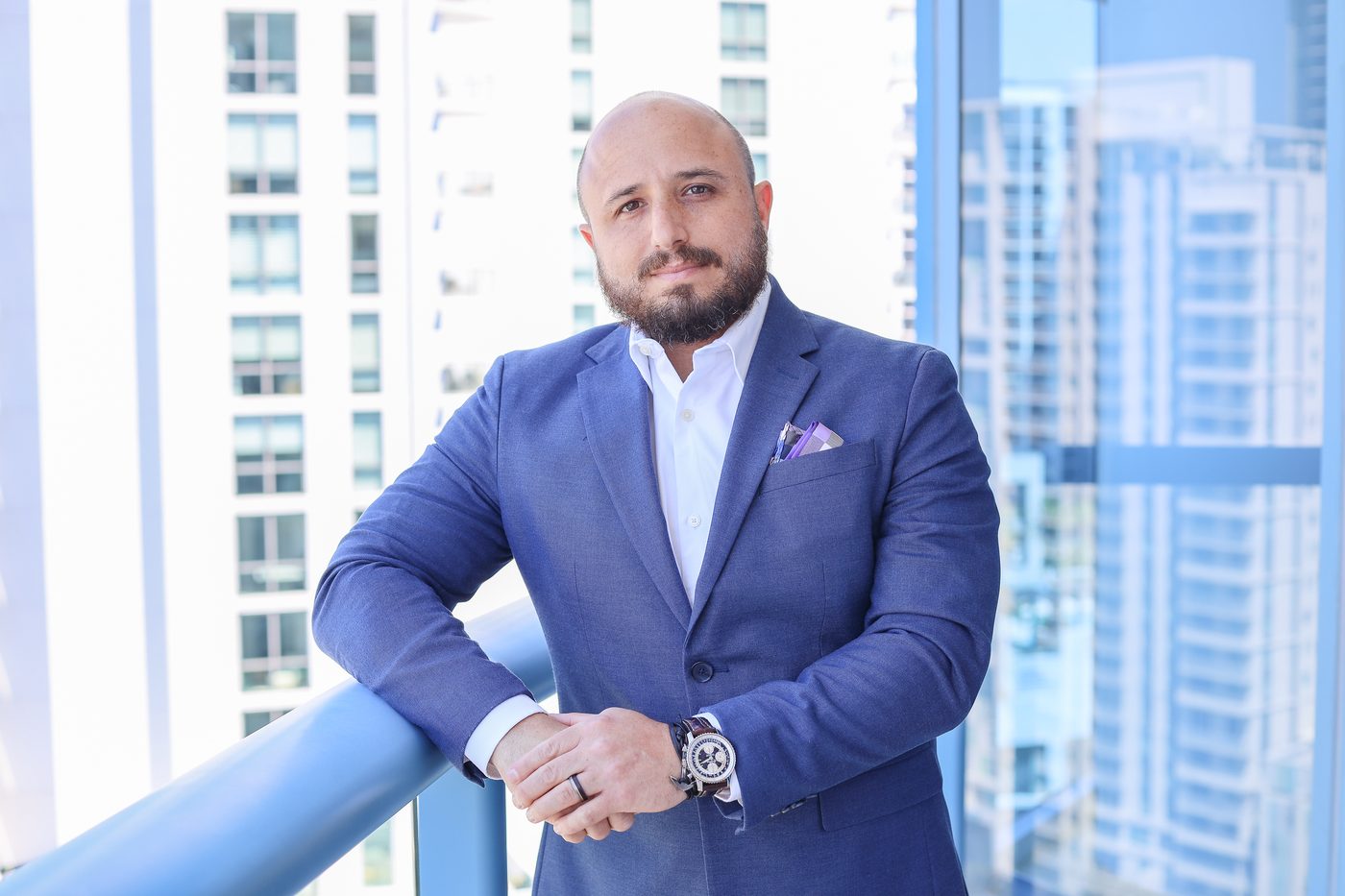
Adam Ludwin
Managing Partner, Ludwin Law Group, P.A.
Adam Ludwin is a civil litigation attorney based in Palm Beach County, Florida. He handles internet defamation, maritime law, business litigation, debt collection, landlord-tenant disputes, and mediation. He practices in both Florida state courts and the Southern District of Florida federal court.
- Juris Doctor, Nova Southeastern University Shepard Broad College of Law
- B.S. Finance, Pennsylvania State University
- Member, The Florida Bar
- Member, Federal Bar Association
- Member, Palm Beach County Bar Association
- Martindale-Hubbell Client Champion Platinum 2026