When Your Boat or Business Is on the Line, You Need a Maritime Attorney.
Not just any litigator. One who knows admiralty jurisdiction, vessel arrest procedure, and how to enforce a maritime lien before the vessel changes hands. You need a maritime lien attorney Florida vessel owners and marine businesses call.
South Florida Runs on the Water. So Does Our Practice.
A maritime lien attorney in Florida handles legal disputes that arise on navigable waters, including boat manufacturer defect claims, vessel warranty disputes, maritime lien enforcement, vessel arrest proceedings in federal court, and commercial shipping disputes. Maritime law operates under a separate federal legal system with its own jurisdiction, procedures, and remedies that do not exist in state courts.
Ludwin Law Group represents boat owners, marinas, boatyards, marine repair shops, and marine service providers in federal and state courts throughout Florida. Maritime and admiralty law is a completely separate legal system from the state civil courts most attorneys practice in, with its own federal jurisdiction, its own procedural rules, and its own remedies.
Choosing the wrong attorney for a maritime dispute can mean the difference between recovering what you are owed and losing your claim entirely. If you need to pursue your maritime claim through civil litigation, we handle that, too.
Who We Represent
- → Boat owners with defective vessels or denied warranties
- → Marinas and boatyards pursuing unpaid maritime liens
- → Marine businesses in commercial contract disputes
- → Vessel owners defending against invalid lien claims
- → Marine service providers in payment disputes
- → Buyers and sellers in vessel purchase disagreements
Martindale-Hubbell
5-Star Google Reviews
Federal Court Practice
Case Review, No Obligation
What We Handle
From defective vessels and denied warranties to maritime liens and federal vessel arrests, we handle the full spectrum of maritime and admiralty disputes in South Florida.
Boat Manufacturer Defects
Product liability claims for defective vessels, engines, hydraulic systems, electrical systems, and hull construction. Strict liability applies.
Strict Liability
Boat Warranty Disputes
Express and implied warranty claims when manufacturers or dealers refuse to repair or replace defective vessels under Florida law.
Fee Recovery Available
Maritime Liens
Enforcement and defense of maritime liens for marinas, repair shops, parts suppliers, and vessel owners. Attaches automatically, follows the vessel.
No Filing Required
Vessel Arrests
Federal in rem proceedings to seize vessels as security for maritime claims, preventing the owner from moving or selling the boat.
Federal Court
Hydraulic & Mechanical Failures
Claims against manufacturers and installers for defects in steering, trim tabs, and stabilizers that result in loss of vessel control.
Product Liability
Commercial Maritime Disputes
Charter party disputes, marine insurance claims, cargo damage, vessel purchase and sale disputes, and marina contract litigation.
Full Service
Maritime Case Types We Handle in South Florida
Every maritime matter has unique procedural requirements. Below is a closer look at the most common case types we see, and the details you should know before contacting an attorney.
Boat Manufacturer Defect Claims
+
A boat manufacturer defect is any flaw in design, materials, or assembly that makes a vessel unsafe or unfit for its intended use. Under federal and Florida product liability law, manufacturers are strictly liable. You do not need to prove negligence.
Common defects we handle:
- Engine failures: overheating, fuel injection malfunctions, cracked blocks
- Hydraulic system failures: loss of steering, defective pumps, cylinders
- Electrical defects: fire hazards, disabled navigation or safety systems
- Oil cooler failures causing catastrophic engine damage
- Gas leaks and ventilation deficiencies creating explosion or CO risks
- Stabilizer defects causing dangerous vessel listing or rolling
- Water intrusion from defective hull construction or through-hull fittings
Claims may be pursued against the manufacturer, dealer, component supplier, or all three. Florida product liability statute provides both compensatory damages and, in some cases, punitive damages.
Boat Warranty Disputes
+
When manufacturers and dealers refuse to honor express or implied warranties, Florida law provides strong remedies. We handle disputes involving:
- Repeated repair failures where the same defect keeps returning
- Dealers or manufacturers who refuse to authorize warranty repairs
- Claims denied on technicalities: maintenance records, “unauthorized” modifications
- Disputes over whether a defect existed at the time of delivery
Maritime Liens: For Marinas & Repair Shops
+
If you provided necessaries to a vessel (fuel, repairs, dockage, supplies, storage) and the owner has not paid, you likely have a federal maritime lien against the vessel itself.
What makes a maritime lien different:
- No filing, recording, or notice required: attaches automatically
- Follows the vessel from owner to owner, even through a sale
- Enforceable in federal court through vessel arrest proceedings
- Generally stronger than a state mechanic’s lien
We prosecute maritime lien claims in the Southern District of Florida, including lien foreclosure and vessel arrest when necessary to secure payment.
Maritime Liens: Defending Vessel Owners
+
If a lien has been asserted against your vessel or your boat has been arrested, you need experienced counsel immediately. Not every claim qualifies as a maritime lien. We defend vessel owners against:
- Claims where the services do not qualify as maritime necessaries
- Inflated or fabricated charges
- Procedural defects in how the lien was filed or arrest obtained
We also negotiate release of your vessel while the dispute is pending, so your boat is not sitting idle while the case is resolved.
Vessel Arrests & Federal In Rem Proceedings
+
A vessel arrest seizes the boat as security for a maritime claim. Once arrested, the owner cannot move, sell, or operate it until the dispute is resolved, which often forces swift settlement.
We handle vessel arrests in the Southern District of Florida under the Supplemental Rules for Admiralty or Maritime Claims, a specialized procedure most attorneys have never used.
What we handle:
- Filing in rem complaints in federal district court
- Obtaining arrest warrants through the U.S. Marshal
- Posting substitute security (bonds) to release an arrested vessel
- Lien priority disputes when multiple claimants attach to the same vessel
Commercial Maritime Disputes
+
- Charter party disputes: hire payment, vessel condition, performance, cancellation
- Marine insurance claims: coverage disputes, claim denials, insurer bad faith
- Cargo damage claims against carriers or insurers
- Vessel purchase and sale disputes: undisclosed defects, failed closings
- Marina contract litigation: slip agreements, storage, repair contracts
- Salvage rights disputes and compensation claims
Charter party disputes and commercial maritime contracts require specialized legal knowledge. Our firm helps vessel owners and charterers resolve charter party disagreements through our business litigation expertise to protect their contractual rights.
Not all maritime disputes require litigation. Our firm offers the option to resolve maritime disputes through mediation, which can preserve business relationships while reaching efficient resolutions.
Why Your Maritime Case Needs a Specialized Attorney
Maritime and admiralty law operates under a separate body of federal law with its own jurisdiction, procedural rules, and remedies. A general litigator cannot arrest a vessel, enforce a maritime lien, or navigate the Supplemental Rules for Admiralty Claims in federal court. Filing in the wrong forum can extinguish your maritime lien rights entirely.
A general litigator cannot arrest a vessel, enforce a maritime lien, or navigate the Supplemental Rules for Admiralty Claims.
Filing in the wrong forum can extinguish your maritime lien rights entirely.
Statutes of limitation differ by claim type and maritime deadlines are strictly enforced.
Overlapping federal and state law requires knowing which theories maximize your recovery.
Maritime tools like vessel arrest only work if used correctly and promptly.
The Ludwin Law Group Difference
Ludwin Law Group handles maritime and admiralty matters as a core part of our practice, not as an occasional case type. We understand the interplay between federal admiralty jurisdiction and Florida state law.
We handle vessel arrests, maritime attachment, and in rem proceedings in the Southern District of Florida regularly. This is not unfamiliar territory, and that familiarity protects our clients.
What Happens When You Call Us
Free Case Review
Tell us what happened. We listen, evaluate your claim, and tell you honestly what your options are.
Identify Your Claims
We determine the right legal theories (maritime lien, product liability, warranty, or admiralty) and the correct forum.
We Act Fast
Maritime disputes move quickly. We preserve your rights and gather evidence before deadlines or vessel transfers cut off your options.
Fight for Recovery
Through negotiation or federal court, we pursue every available remedy, including vessel arrest when necessary.
A Vessel Can Change Hands While You Wait.
Maritime lien rights are time-sensitive. The longer you wait, the more options close. Contact us today for a free, confidential case review.
Ready to Discuss Your Maritime Case?
Free, confidential consultation. No obligation. We evaluate your claim and give you an honest assessment of your options.
Frequently Asked Questions: Maritime Law in Florida
Questions people commonly ask before contacting a maritime attorney in South Florida.
A maritime lien is a claim against a vessel itself, not the owner, that attaches automatically when certain services are provided, including repairs, fuel, dockage, and supplies. No filing or recording is required. To enforce a maritime lien, the lienholder files an in rem action in federal court and may arrest the vessel. Unlike state mechanic’s liens, a maritime lien follows the vessel regardless of ownership, even if the boat is sold before you file suit.
Document the defect with photos and video. Keep all repair invoices, correspondence with the manufacturer or dealer, and your original purchase documents. Do not make major repairs yourself before consulting an attorney. Contact a maritime attorney before accepting any settlement offer. Florida product liability claims generally have a four-year statute of limitations, but some warranty contracts contain shorter periods. Act promptly.
If you provided necessaries to the vessel (storage, dockage, repairs, fuel, or supplies), you likely have a federal maritime lien that requires no filing to attach and follows the vessel through any ownership change. We can enforce your lien in federal court, including arresting the vessel if the owner refuses to pay. The most critical factor: maritime lien rights can be lost if the vessel is sold to a good-faith buyer before you act. Contact us promptly.
Yes. Under product liability law, boat manufacturers are strictly liable for design defects, manufacturing defects, and failure to warn. You do not need to prove the manufacturer was negligent. Claims can be pursued against the manufacturer, dealer, component supplier, or all three. These cases often involve overlapping federal maritime law and state product liability statutes, which is exactly why maritime-specific counsel matters.
It depends on the claim type: product liability is 4 years in Florida, maritime tort claims are typically 3 years, and maritime lien claims for unpaid services are generally 1 year under federal maritime law. Some warranty contracts also contain arbitration clauses or shortened limitation periods that apply before the statutory deadline. The safest approach is to consult a maritime attorney as soon as you identify a potential claim.
A vessel warranty dispute attorney represents buyers of boats and marine vessels when the manufacturer or dealer refuses to honor a warranty on a defective vessel. You need one when a warranty claim is denied, when repeated repairs fail to fix the same defect, or when the dealer refuses to authorize covered repairs. Vessel warranty disputes arise when there are disagreements between buyers and sellers regarding the condition, specifications, or performance of a vessel at the time of sale.
Admiralty litigation covers disputes arising from maritime activities and contracts, including collision claims, cargo damage, salvage operations, personal injury at sea, charter party disputes, and insurance claims. These cases involve specialized maritime law that differs from general civil litigation, with unique procedural rules and substantive doctrines. The federal courts have exclusive jurisdiction over many admiralty matters.
Maritime insurance claims require prompt notice to your insurer and careful documentation of the loss or damage. You should preserve all evidence, take reasonable steps to mitigate further damage, and maintain detailed records of your expenses and losses. A maritime insurance claim lawyer in South Florida can help you navigate the claims process, respond to insurer inquiries, and negotiate fair compensation.
Maritime law operates under a separate body of federal law with its own rules, procedures, and remedies. A general litigator may not know how to arrest a vessel, enforce a maritime lien, or navigate the Supplemental Rules for Admiralty Claims. The forum you file in, the procedural rules you follow, and the legal theories you assert all affect whether you win and how much you recover. Choosing an attorney who works in this area regularly means your case is pursued correctly from day one.
Adam Ludwin
Maritime & Admiralty Attorney, Delray Beach, Florida
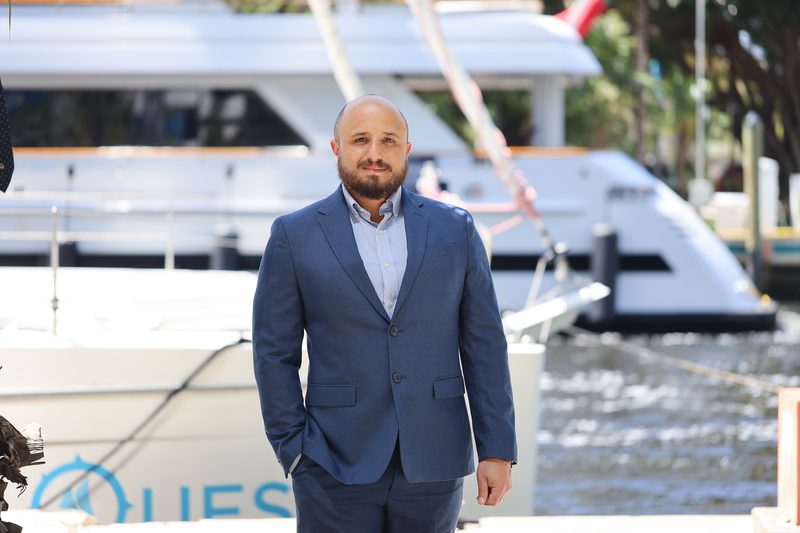
Adam M. Ludwin, Esq.
Founder, Ludwin Law Group
Adam Ludwin is a maritime lien attorney Florida vessel owners and marine businesses trust for lien enforcement, vessel arrests, and manufacturer defect claims. He founded Ludwin Law Group with a focus on complex civil litigation in federal and state courts. His maritime practice spans boat manufacturer defect claims, warranty disputes, maritime lien enforcement and defense, and vessel arrest proceedings in the Southern District of Florida.
- J.D., Nova Southeastern
- B.S. Finance, Penn State
- Florida Bar
- Federal Bar Association
- ABA
- 5.0 Martindale-Hubbell
Maritime Law Throughout South Florida
Ludwin Law Group represents clients across South Florida’s coastal communities. Whether your incident occurred off Miami Beach, through the Boca Inlet, or on the Loxahatchee River, Adam Ludwin brings the same depth of maritime experience to your case.