Someone Shared Your Private Images. Florida and Federal Law Both Address It.
Florida has three statutes covering nonconsensual intimate images, one of which lets you sue for $10,000 or your actual damages, whichever is greater. Federal law adds a fourth, with liquidated damages of $150,000 written into the statute and a provision that lets the court protect a plaintiff’s identity.
What happened to you was designed to make you feel powerless. The law exists so you can take that power back, and helping you use it to recover is what we do.
What happened to you?
Four Statutes. Every One of Them Lets You Sue.
Florida and federal law both address the sharing of intimate images without consent, through several separate statutes with different requirements. Florida Statute §784.049 makes it a crime and creates a civil action for $10,000 or your actual damages, whichever is greater, plus punitive damages and attorney fees. Florida Statute §836.13 covers AI-generated and altered sexual images. Florida Statute §836.14 covers images that were stolen, or promoted for financial gain. And 15 U.S.C. §6851 allows a federal suit for your actual damages or liquidated damages of $150,000, plus attorney’s fees, and the statute provides that the court may grant injunctive relief maintaining the confidentiality of a plaintiff using a pseudonym. Where your image was used to make money, Florida’s misappropriation statute, §540.08, and Florida common law add claims of their own.
What happened to you is covered by more law than most people realize, and the newest pieces are very new. Florida’s sexual cyberharassment statute was amended effective October 1, 2025. It added punitive damages, added a felony tier for violations committed for financial gain, and changed the definition of the offense itself. Florida’s AI deepfake law, called Brooke’s Law, took effect June 10, 2025 and requires covered platforms to remove reported altered sexual depictions within 48 hours. On May 19, 2026 the Federal Trade Commission began enforcing the federal TAKE IT DOWN Act, which imposes its own 48-hour removal deadline on platforms nationwide.
Under the law, consent to take a photo is not consent to share it. That single sentence is the answer to the question most people are too embarrassed to ask, and it is why so many strong cases never get filed.
- People whose intimate images were shared by a former partner or someone they trusted
- People targeted with AI-generated or digitally altered sexual images
- People whose private images were stolen from a device, account, or cloud backup
- People recorded without their knowledge, or while they were unable to consent
- People whose images are being sold, monetized, or used to promote a paid account
- People being threatened with the release of intimate images
- Parents, guardians, and estate representatives acting for someone who cannot act for themselves
- People who submitted platform removal requests and were ignored
Not Sure Which Law Applies to You?
That is what the call is for. Free, confidential, no obligation.
Every Path the Statutes Give You.
Different statutes cover different situations, and they can apply at the same time. Part of our job is identifying which ones fit your facts. Each path below is a way of taking back control: of the images, of your name, and of what happens next.
Florida Sexual Cyberharassment Claims
Florida’s civil action for willfully and maliciously publishing or disseminating a sexually explicit image without consent, where the image carries, or is published alongside, information identifying you. The statute provides injunctive relief, $10,000 or your actual damages whichever is greater, punitive damages, and reasonable attorney fees and costs.
Fla. Stat. §784.049Federal Intimate Image Lawsuits
A federal claim with a $150,000 liquidated damages figure written into the statute, plus attorney fees and litigation costs. The court may issue a restraining order or injunction directing the defendant to stop displaying the images.
15 U.S.C. §6851AI Deepfakes and Altered Images
Florida law covers digitally created or altered sexual depictions of a real, identifiable person. Willfully generating one without consent, and willfully and maliciously promoting one, are each third-degree felonies, and the statute carries its own civil action for $10,000 or actual damages plus fees.
Fla. Stat. §836.13Stolen and Monetized Images
When images are taken from a device or an account, or promoted for money, a separate Florida statute applies. Willfully promoting a sexually explicit image through print media, a website, or other electronic means for pecuniary or other financial gain, without the identifiable person’s consent, is a second-degree felony, and the statute carries its own civil action.
Fla. Stat. §836.14Commercial Use of Your Likeness
When your image is used to sell something, including paid access to the content itself, Florida’s misappropriation statute applies. Publishing or publicly using a person’s name, photograph, or likeness for trade, commercial, or advertising purposes without express consent supports injunctive relief and damages, including an amount that would have been a reasonable royalty, plus punitive damages.
Fla. Stat. §540.08Common Law Privacy Claims
Florida common law adds claims that exist independent of any statute: intrusion upon seclusion, public disclosure of private facts, and intentional infliction of emotional distress. They reach conduct the statutes may not, including the intrusion itself rather than only the publication, and they carry compensatory damages and, where the conduct warrants it, punitive damages.
Florida Common LawEmergency Platform Takedowns
Federal law requires covered platforms to remove reported nonconsensual intimate images, and known identical copies, within 48 hours of a valid request. The FTC began enforcing that duty on May 19, 2026. We prepare and press these demands.
Pub. L. 119-12, §3Identifying Anonymous Posters
Images posted from a burner account or an anonymous handle are not the end of the road. We pursue identification of the person behind the account so there is a defendant to hold responsible.
Litigation & DiscoveryThe Law, in Its Own Words.
Florida Sexual Cyberharassment, Fla. Stat. §784.049
The offense is committed by a person who willfully and maliciously sexually cyberharasses another person. As amended effective October 1, 2025 (chapter 2025-84, Laws of Florida), Florida defines “sexually cyberharass” as intentionally publishing to an Internet website, or intentionally disseminating through electronic means to another person, a sexually explicit image of a person without that person’s consent and contrary to their reasonable expectation that the image would remain private, where either of two conditions is met.
- Condition one: the image contains or conveys the personal identification information of the depicted person
- Condition two: that information is not in the image itself, but is contemporaneously published or disseminated in a way that someone viewing it would reasonably know it directly relates to the person in the image
- “Sexually explicit image” covers nudity, sexual conduct, and the display of semen or vaginal secretion on a person
- “Personal identification information” includes a name, an email or postal address, a phone number, a social security number, a date of birth, or any unique physical representation
- The statute requires that the person act willfully and maliciously, and that the publishing or disseminating be intentional
- A first offense is a first-degree misdemeanor. A person with one prior conviction for sexual cyberharassment who commits another one commits a third-degree felony
- Doing it for pecuniary or other financial gain is a third-degree felony, and a second or subsequent such violation is a second-degree felony
- The 2025 amendment also added a dedicated criminal limitations provision for these prosecutions at Fla. Stat. §775.15(22)
- The civil action provides injunctive relief, $10,000 or actual damages whichever is greater, punitive damages, and reasonable attorney fees and costs
Read the current statutory text at the Florida Senate’s official site.
The detail that decides cases. Florida ties the offense to information identifying you, either carried in the image or published right alongside it, and requires that the person acted willfully and maliciously. The second identifying-information route was added in 2025 and is broader than the older version of the statute. If you have read an older summary of Florida’s revenge porn law, it may be describing a definition that no longer exists.The Federal Claim, 15 U.S.C. §6851
Congress created this civil action in March 2022, and it took effect on October 1, 2022. It applies where an intimate visual depiction is disclosed without consent, in or affecting interstate commerce, by a person who knows that, or recklessly disregards whether, the individual has not consented. The statute reaches a “depicted individual”: someone whose body appears in the depiction and who is identifiable by their face, likeness, or other distinguishing characteristic such as a unique birthmark or other recognizable feature, or from information displayed in connection with the depiction. Unlike the Florida statute, it does not require that your personal identification information be carried in or published alongside the image.
- Damages: your actual damages, or liquidated damages of $150,000, plus the cost of the action including reasonable attorney’s fees and other litigation costs
- Injunctions: the court may order a temporary restraining order, preliminary injunction, or permanent injunction directing the defendant to cease display or disclosure
- Anonymity: in the statute’s words, “the court may grant injunctive relief maintaining the confidentiality of a plaintiff using a pseudonym”
- Others may sue on your behalf: where the individual is under 18, incompetent, incapacitated, or deceased, a legal guardian, estate representative, another family member, or a court-appointed person may assert their rights, and the defendant can never be that representative
- Exceptions written into the statute: no action may be brought relating to commercial pornographic content, unless that content was produced by force, fraud, misrepresentation or coercion; to good-faith disclosures to law enforcement, as part of a legal proceeding, as part of medical education, diagnosis or treatment, or in reporting or investigating unlawful content or unwelcome conduct; to a matter of public concern or public interest; or to a disclosure reasonably intended to assist the individual depicted
Read the statute at the Office of the Law Revision Counsel’s official U.S. Code site.
The sentence most people need to read. The statute says that the fact you consented to the creation of the image does not establish that you consented to its distribution, and that having shared it with one person does not establish consent to further disclosure by someone else. Sending it does not forfeit your rights.AI and Altered Images, Fla. Stat. §836.13 and Brooke’s Law
Florida covers an “altered sexual depiction”: a visual depiction that, through digital, electronic, mechanical or other modification, depicts a realistic version of an identifiable person with another person’s nude body parts, or engaged in sexual conduct the person did not actually engage in. An “identifiable person” is one recognizable as an actual person by face, likeness, or other distinguishing characteristic.
- Generating one: willfully generating an altered sexual depiction of an identifiable person without their consent is a third-degree felony
- Promoting one: willfully and maliciously promoting one, or possessing it with intent to maliciously promote it, without consent, knowing or having reason to know it is an altered sexual depiction, is a third-degree felony
- Soliciting one: soliciting one without consent, knowing or having reason to know what it is, is a third-degree felony
- The civil action reaches violations of the generating and promoting provisions, and provides injunctive relief, $10,000 or actual damages whichever is greater, and reasonable attorney fees and costs
- Covered platforms had to establish a removal process by December 31, 2025 and must remove a reported nonconsensual altered sexual depiction as soon as possible, and not later than 48 hours, after a valid request
Read the current statutory text at the Florida Senate’s official site.
Brooke’s Law is House Bill 1161, enacted as chapter 2025-133 and effective June 10, 2025. Its formal title is “Removal of Altered Sexual Depictions Posted without Consent.” Federal law reaches the same conduct: the TAKE IT DOWN Act’s definition of a “digital forgery” expressly names software, machine learning, and artificial intelligence.Stolen or Monetized Images, Fla. Stat. §836.14
This is the statute almost nobody talks about. Its title is “Theft or unauthorized promotion of a sexually explicit image,” and it covers a different wrong than §784.049. Not the betrayal of a private image, but the taking and the selling of one.
- Committing a theft, in violation of Florida’s theft statute, of a sexually explicit image with the intent to promote it is a third-degree felony
- Willfully possessing one with intent to promote it for pecuniary or other financial gain, knowing or having reason to know it was obtained by that theft, is a third-degree felony
- Willfully promoting one through print media, an Internet website, or other electronic means, for pecuniary or any other financial gain, without the identifiable person’s consent, is a second-degree felony
- The civil action provides injunctive relief, $10,000 or actual damages whichever is greater, and reasonable attorney fees and costs
Read the current statutory text at the Florida Senate’s official site.
Note on exemptions. The statute exempts several categories, including “sexually explicit images involving voluntary exposure in a public or commercial setting” and images possessed or promoted by a bona fide news media organization for a legitimate and newsworthy purpose. Whether and how those exemptions apply to any particular situation is a question we look at directly with you, because it can change which statute fits.Beyond the Four: Misappropriation of Likeness, Fla. Stat. §540.08
Florida has protected people from the commercial exploitation of their own image since long before the internet. Section 540.08 prohibits publishing, displaying, or otherwise publicly using the name, portrait, photograph, or other likeness of a person for trade, commercial, or advertising purposes without express written or oral consent.
- The statute provides injunctive relief against further unauthorized use
- Damages include the loss or injury sustained, including an amount that would have been a reasonable royalty for the use of your likeness
- The statute expressly allows punitive or exemplary damages
- Statutory exceptions exist, including bona fide news reports having a current and legitimate public interest
Where intimate images are used to draw followers, subscribers, or paying customers to an account, this statute speaks directly to that use. Read the text at the Florida Senate’s official site.
Why this one matters. The intimate image statutes measure the wrong of exposure. This statute measures the wrong of profit. When someone else makes money from your likeness, the law values what they took, and a royalty you never agreed to charge is still a royalty you were owed. Florida common law claims, including intrusion upon seclusion, public disclosure of private facts, and intentional infliction of emotional distress, are frequently pleaded alongside it.Someone Is Threatening to Post Images, Fla. Stat. §836.05
If nothing has been posted yet, you are in a different legal position, and we want to be straight with you about it. Florida’s extortion statute makes it a crime to maliciously threaten an injury to the person, property or reputation of another, to expose another to disgrace, to expose any secret affecting another, or to impute a lack of chastity to another, where the threat is made with intent to extort money or any pecuniary advantage, or to compel the person threatened to do or refrain from any act against their will.
- That offense is a second-degree felony
- The section itself does not contain a civil cause of action
- Florida’s intimate image statutes are written around publication, dissemination, promotion, or disclosure, meaning conduct that has already happened
Read the current statutory text at Online Sunshine, the official site of the Florida Legislature.
What that means practically. At the threat stage the criminal exposure is serious and immediate, and that matters. Preserving evidence now, the messages, the account, the timestamps, is what protects every option you may need later. Do not pay, and do not delete the thread. Call us and call law enforcement.What These Statutes Do Not Answer
Everything above is what the law says. This card is what it does not say. We would rather tell you where the open questions are than pretend they do not exist, because these are the questions that decide real cases.
- Deadlines. None of these statutes states a civil filing deadline on its face, so the deadline comes from general limitations law. For the Florida statutory claims, the most likely candidate is Florida’s four-year period for actions founded on a statutory liability, Fla. Stat. §95.11(3)(e). The 2023 tort reform’s two-year change applied to negligence claims, not to statutory liability. For the federal claim, which contains no limitations period of its own, the generally applicable federal default is four years, 28 U.S.C. §1658(a). Which period a court would apply to your claim, and when it started, are questions about your facts, and the clock can start earlier than people expect. Do not assume time is on your side.
- When the clock starts. Florida law addresses claims founded on a single publication, and Florida courts have also described a multiple publication rule under which each separate communication can be its own claim. Which framework governs an intimate image that was posted once, or reposted later, is not answered in the text of any of these statutes.
- Reposts. Florida appellate courts have said the analysis turns on whether a separate and distinct decision was made to republish the material. That is a question about the facts of your situation, not a question the statute answers.
- Platforms. The federal 48-hour removal duty is enforced by the Federal Trade Commission. What a platform’s failure to comply means for you specifically is a separate question from what it means for the FTC.
- Which court. Florida and federal law give different remedies, carry different requirements, and are not equally good in every case. The federal statute’s $150,000 figure and pseudonym provision are real advantages, and they do not make it the right choice every time.
Every One of These Statutes Has Requirements.
Tell us what happened and we will tell you which ones your situation meets.
Internet Cases Are What This Firm Does.
Ludwin Law Group is a boutique litigation firm in Delray Beach. Adam Ludwin holds a Martindale-Hubbell Client Review Rating of 5.0 out of 5.0 and the firm has 54 five-star Google reviews. Cases in this area are handled with the same seriousness as any other matter the firm takes to court, and with more attention to privacy than most.
This is the firm’s primary practice.
Internet defamation and online harm are what Ludwin Law Group does. Anonymous accounts, platform removal demands, and content that keeps resurfacing are familiar ground here.
Federal court, not just state court.
The strongest claim in this area is a federal one, and its damages and pseudonym provisions are available only in federal court.
We track this area as it changes.
Two of these Florida statutes were rewritten in 2025, the federal criminal law was enacted in May 2025, and FTC enforcement of the platform removal duty began on May 19, 2026, opening with compliance letters to fifteen of the largest platforms. Florida made further technical amendments to §836.13 and §836.14 effective July 1, 2026. In Congress, the DEFIANCE Act, which would add a federal civil claim for sexually explicit deepfakes, passed the Senate on January 13, 2026 and remains pending in the House; it is not yet law, and we are watching it. Anything written about Florida’s sexual cyberharassment statute before October 1, 2025 is describing a definition that has since changed.
Helplessness is part of the injury. The law is built to answer it.
People in this situation often say the worst part is feeling powerless while someone else decides what happens to their own images. Every step in this work, a removal demand pressed, an anonymous poster identified, a claim filed, is aimed at putting the decisions back where they belong: with you.
Discretion is the default.
Consultations are confidential. Where the law allows it, we pursue every available protection for your identity, including the federal statute’s pseudonym provision.
We tell you what is not settled.
You will get a straight answer about the strengths and the open questions in your situation, including the ones that make a case harder. That is more useful than confidence.
What Happens When You Call.
Free, Confidential Case Review
You tell us what happened. You do not need to send us the images to have this conversation. We identify which statutes fit and what can be done first.
Preserve and Document
We work out what evidence exists and how to preserve it: URLs, account names, timestamps, and every date the material appeared or reappeared. This step protects options you may need months from now.
Removal and Demand
We press platform removal requests under the applicable state and federal removal provisions, and send demands where there is an identified person to send them to.
Suit, in the Right Court
Where litigation is the answer, we assess which forum fits your claim, state court or federal court.
Help You Can Use Right Now.
These resources exist and they help, whether or not you ever call a lawyer. We list them because being useful to you comes first.
Platform removal
Every covered platform must maintain a removal process under federal law. Submit your request directly to the platform through that process. If the platform fails to act within 48 hours, or has no removal process at all, that failure can be reported to the Federal Trade Commission at TakeItDown.ftc.gov.
StopNCII.org
A free tool for adults that creates a digital fingerprint of an intimate image on your own device, without the image ever leaving it, so participating platforms can block the image from being posted or shared.
Take It Down (NCMEC)
The National Center for Missing & Exploited Children’s free service at takeitdown.ncmec.org for removing intimate images taken when the person depicted was under 18, no matter their age today.
Cyber Civil Rights Initiative
Support and safety resources for image-based abuse at cybercivilrights.org, including CCRI’s free 24/7 Image Abuse Helpline, 844-878-2274.
Preserve everything first
Before anything comes down, screenshot the post, the URL, the account name, and the date. Removal is the goal. Evidence is the case.
This Is Not Your Fault, and You Do NOT Have to Solve It Alone.
A free, confidential case review costs you nothing and takes one phone call. You do not have to send us anything to start.
Revenge Porn and Intimate Image Questions, Answered.
If your situation is not covered here, call. Consultations are free and confidential.
Yes. The TAKE IT DOWN Act was signed into law on May 19, 2025 and added a new subsection to 47 U.S.C. §223. It covers both authentic intimate visual depictions and “digital forgeries,” meaning images created through software, machine learning, or artificial intelligence. Where the person depicted is an adult, the penalty is a fine and up to two years. Where the person is a minor, up to three years. There are separate offenses for threatening to publish: a threat involving a digital forgery carries up to 18 months, or up to 30 months where a minor is involved, and a threat involving an authentic depiction is punished the same as the underlying offense. Separately, there is a federal civil claim at 15 U.S.C. §6851 that you can bring yourself.
Yes, and three separate Florida statutes can apply. Fla. Stat. §784.049 covers willfully and maliciously publishing or disseminating a sexually explicit image without consent, where information identifying you is either carried in the image or published alongside it. Fla. Stat. §836.13 covers AI-generated and digitally altered sexual depictions. Fla. Stat. §836.14 covers images that were stolen, or promoted for financial gain. Each carries criminal penalties, and each also creates a civil action you can bring yourself. Where images were sold or used commercially, Florida’s misappropriation statute, §540.08, can apply as well.
You still have rights, and the federal statute addresses this directly. 15 U.S.C. §6851 provides that the fact you consented to the creation of the image does not establish that you consented to its distribution, and that the fact you disclosed it to someone else does not establish that you consented to further disclosure by the person who shared it. Sending an image to someone you trusted is not a waiver of your rights, and it is not a defense for the person who spread it.
It can still be covered, and the two statutes get there by different routes. The federal statute, 15 U.S.C. §6851, reaches a “depicted individual” who is identifiable by their face, likeness, or other distinguishing characteristic such as a unique birthmark or other recognizable feature, or from information displayed in connection with the depiction. A visible face is one way to be identifiable, not the only one. Florida’s §784.049 works from a different angle: it applies where the image contains or conveys personal identification information, or where that information is published or disseminated at the same time in a way that someone viewing it would reasonably know it directly relates to the person in the image. Which of these fits depends on the image itself and on what was posted alongside it, and that is worth reviewing with us rather than assuming.
It depends on which statute applies. Under the federal statute, 15 U.S.C. §6851, you may recover your actual damages or liquidated damages of $150,000, plus the cost of the action including reasonable attorney’s fees and other litigation costs. Under Florida’s §784.049, §836.13, and §836.14, the civil action provides $10,000 or your actual damages, whichever is greater, plus attorney fees and costs, and §784.049 also allows punitive damages. Where your likeness was used commercially, Florida’s §540.08 adds damages that include an amount that would have been a reasonable royalty, plus punitive damages. What any individual case is actually worth depends on facts we would need to review with you.
Not necessarily. The federal statute contains a provision written for exactly this concern: 15 U.S.C. §6851 states that in ordering relief, “the court may grant injunctive relief maintaining the confidentiality of a plaintiff using a pseudonym.” That is a decision for the court, not something any lawyer can promise you in advance, but it is written into the statute, and it is one of the strongest reasons to consider the federal claim.
None of these statutes states a civil filing deadline on its face, so the deadline comes from general limitations law. For the Florida statutory claims, the most likely candidate is Florida’s four-year period for actions founded on a statutory liability, Fla. Stat. §95.11(3)(e); the 2023 tort reform’s two-year change applied to negligence, not statutory liability. For the federal claim, which has no limitations period of its own, the generally applicable federal default is four years under 28 U.S.C. §1658(a). But which period a court would apply, and when the clock started, are questions about your specific facts. The clock can begin earlier than most people expect, potentially from the date the images were first shared rather than the date you found out, and Florida courts have described more than one framework for when claims founded on a publication accrue. Do not assume you have time, and call before you make that assumption.
Not necessarily, and it is worth asking rather than assuming. Florida appellate courts have addressed when a later posting counts as a new publication, and have said the analysis turns on whether a separate and distinct decision was made to republish the material. Whether that helps in your situation depends on the specific facts, which is why we ask for the date of the original posting and the date of every repost you know about.
Yes. Fla. Stat. §836.13 covers an “altered sexual depiction,” a visual depiction modified to show a realistic version of an identifiable person with another person’s nude body parts, or engaged in sexual conduct they did not engage in. Willfully generating one without consent is a third-degree felony, and so is willfully and maliciously promoting one. The statute carries a civil action for $10,000 or actual damages plus fees. Federal law reaches it too: the TAKE IT DOWN Act’s “digital forgery” definition expressly names software, machine learning, and artificial intelligence.
Yes, and the request goes to the platform itself, not to the government. Under Section 3 of the federal TAKE IT DOWN Act, every covered platform was required to establish a notice-and-removal process by May 19, 2026, and once you submit a valid request through that process, the platform must remove the depiction, and known identical copies, as soon as possible and not later than 48 hours. Under Florida’s Brooke’s Law, covered platforms had to establish a removal process by December 31, 2025 and must remove reported altered sexual depictions within 48 hours. If a platform ignores a valid request, or maintains no removal process at all, that failure can be reported to the Federal Trade Commission at TakeItDown.ftc.gov; the FTC began enforcing this duty on May 19, 2026, and noncompliance is treated as an unfair or deceptive practice. What a platform’s failure means for a claim by you personally, as opposed to enforcement by the FTC, is a separate question and one worth asking us about.
It does not weaken your case, and it often strengthens it. The intimate image statutes turn on the absence of consent to disclosure, so a recording you never knew about or could not consent to was, by definition, never consented to at any stage. Florida common law adds claims aimed at the intrusion itself rather than only the publication, including intrusion upon seclusion. And under the federal statute, even people who did consent to a recording keep their rights against its distribution, so someone who never consented at all stands on stronger ground still.
Yes, in several ways. Willfully promoting a sexually explicit image for pecuniary or any other financial gain, without the identifiable person’s consent, is a second-degree felony under Fla. Stat. §836.14, and since October 1, 2025, committing sexual cyberharassment for financial gain is a felony under §784.049 as well. On the civil side, Florida’s misappropriation statute, §540.08, addresses the commercial use of your likeness and allows damages that include an amount that would have been a reasonable royalty, plus punitive damages. And as a practical matter, money changing hands tends to leave the kinds of records that help identify an anonymous poster.
Often, yes. An anonymous account is a starting point, not a dead end. Identifying an anonymous poster is a routine part of the internet cases this firm handles, and it is one of the first things we assess. Separately, platform removal obligations do not depend on knowing who posted the material.
Under the federal statute, yes. 15 U.S.C. §6851 provides that where the individual is under 18, incompetent, incapacitated, or deceased, a legal guardian, an estate representative, another family member, or another person the court appoints as suitable may assume that individual’s rights, and the defendant may never serve as that representative or guardian.
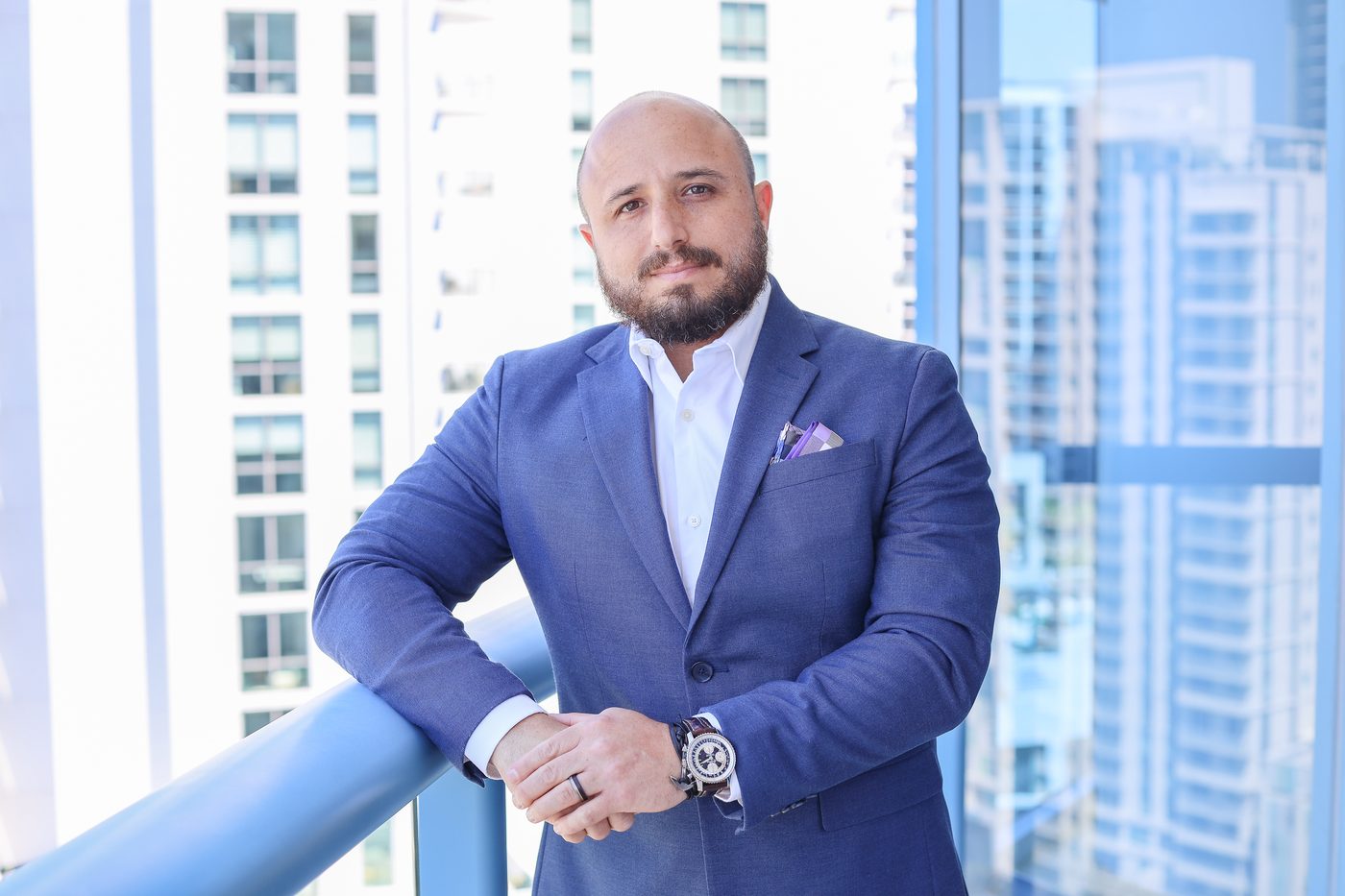
Adam M. Ludwin, Esq.
Adam Ludwin founded Ludwin Law Group to represent Palm Beach County residents in civil litigation, with close attorney involvement at every stage of a case. Internet cases are the core of the firm’s practice: anonymous accounts, content that will not come down, and the harm that follows someone online long after the post goes up.
Ludwin Law Group is a boutique civil litigation firm with close attorney oversight at every stage. These matters are handled with discretion and with the same seriousness as any other case the firm takes to court.
CredentialsOne Confidential Conversation. No Obligation.
You do not have to send us anything, and you do not have to have all the details. Tell us what happened and we will walk you through what the law does and does not cover. Taking your power back does not begin in a courtroom. It begins with one phone call that costs you nothing.